Question or Curiosity
When you lose 275 pounds like I did, your skin goes through changes you never anticipated. The loose skin around my jawline, the texture variations across my face, and the way my complexion seemed to shift weekly—it all made me wonder: could any foundation actually work on skin that’s been through such transformation? I’d tried countless products that promised smooth coverage, only to find they settled into fine lines or emphasized the uneven texture that weight loss had left behind. The real question wasn’t just about coverage—it was about finding something that would work with my new skin reality, not against it.
Real Usage Walkthrough
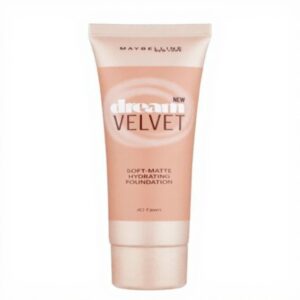
I started testing Maybelline Dream Velvet Foundation on a Tuesday morning, when the light in my bathroom was particularly unforgiving. The first thing I noticed was the texture—it felt cool and almost watery as I dotted it across my forehead, cheeks, and chin. As I blended it in with my fingers (the instructions suggested this method), I could feel the hydration immediately. My skin, which had been feeling tight and dry in some areas yet oddly oily in others post-weight loss, seemed to drink it in. By the time I finished my coffee, the foundation had settled into what I can only describe as a soft-focus version of my face. The redness around my nose—a constant companion since my weight loss—had vanished, but I could still see my freckles. That was important to me; I didn’t want to look like I was wearing a mask.
Throughout the day, I kept checking my reflection in different lighting. In my car’s visor mirror, the foundation held up without turning orange or settling into the creases around my mouth. During my lunch meeting, when the restaurant was warm and humid, I expected shine to break through, but the matte finish maintained its composure. What surprised me most was how it felt at 3 PM—most foundations make me want to wash my face by midday, but this one still felt lightweight, almost like I wasn’t wearing anything. When I finally removed it that evening, my skin didn’t feel stripped or irritated, which had been a problem with other matte formulas I’d tried.
Detailed Tips
If you’re dealing with skin changes after significant weight loss, how you apply foundation matters as much as which one you choose. Start with well-moisturized skin—the hydration from this foundation is noticeable, but it works better when your skin is prepped. I found that using my fingers to apply and blend gave the most natural finish, warming the product just enough to melt into skin rather than sitting on top. Pay extra attention to areas where skin might be looser or have more texture; gentle patting motions rather than dragging worked best for me around my jawline and neck.
The shade matching process requires patience when your skin tone might be in flux. I ordered 40 Fawn based on online descriptions, but what made it work was testing it along my jawline in natural light and giving it fifteen minutes to oxidize before making a fial decision. For touch-ups throughout the day, a light dusting of translucent powder only where needed maintained the velvety finish without building up product. And if you’re like me and have combination skin post-weight loss—oily in some spots, dry in others—focus the foundation application where you need coverage most rather than applying a full face uniformly.
Observational Insight
What surprised me most wasn’t how the foundation looked, but how it changed my relationship with my post-weight-loss skin. The first time I wore it to a family gathering, my cousin mentioned how ‘rested’ I looked—not ‘made up’ or ‘covered,’ but genuinely healthy. That’s when I realized the foundation’s true strength: it doesn’t hide your skin as much as it harmonizes it. The velvety finish somehow makes texture variations less noticeable without completely erasing them, which for me felt more authentic than the full-coverage foundations I’d tried before.
I also noticed something subtle about the hydration claim. Most hydrating foundations I’d tried left my combination skin feeling greasy by afternoon, but this one maintained a balance—the drier areas of my face felt comforted while the oilier zones stayed matte. It was as if the foundation understood that skin after massive weight loss isn’t just one type but a collection of different needs across a single face. The learning curve came in understanding that ‘matte’ doesn’t have to mean ‘flat’—this foundation provides dimension while controlling shine, which is a delicate balance many products fail to achieve.
Practical Reflection
After six weeks of consistent use, I’ve come to appreciate the small trade-offs that come with this foundation. While it builds beautifully to medium coverage, it won’t completely camouflage every spot or discoloration—and I’ve come to see that as a positive rather than a limitation. It forces me to be at peace with the skin I have now, not the skin I wish I had. The texture reminds me of cool silk against my fingertips each morning, a small sensory pleasure that starts my day on a positive note.
The most valuable lesson has been understanding that foundation after weight loss isn’t about creating perfection—it’s about finding a product that works with your new normal. This foundation does that by providing enough coverage to even out tone variations while maintaining a natural-looking finish that doesn’t draw attention to itself. It’s become my daily companion not because it transforms my face, but because it helps me feel comfortable in the skin I’ve worked so hard to achieve. And in the journey of weight loss, that comfort might be the most important beauty product of all.